

Sri Lanka Prices After Cyclone Ditwah: Food, Essentials & Electronics Affected
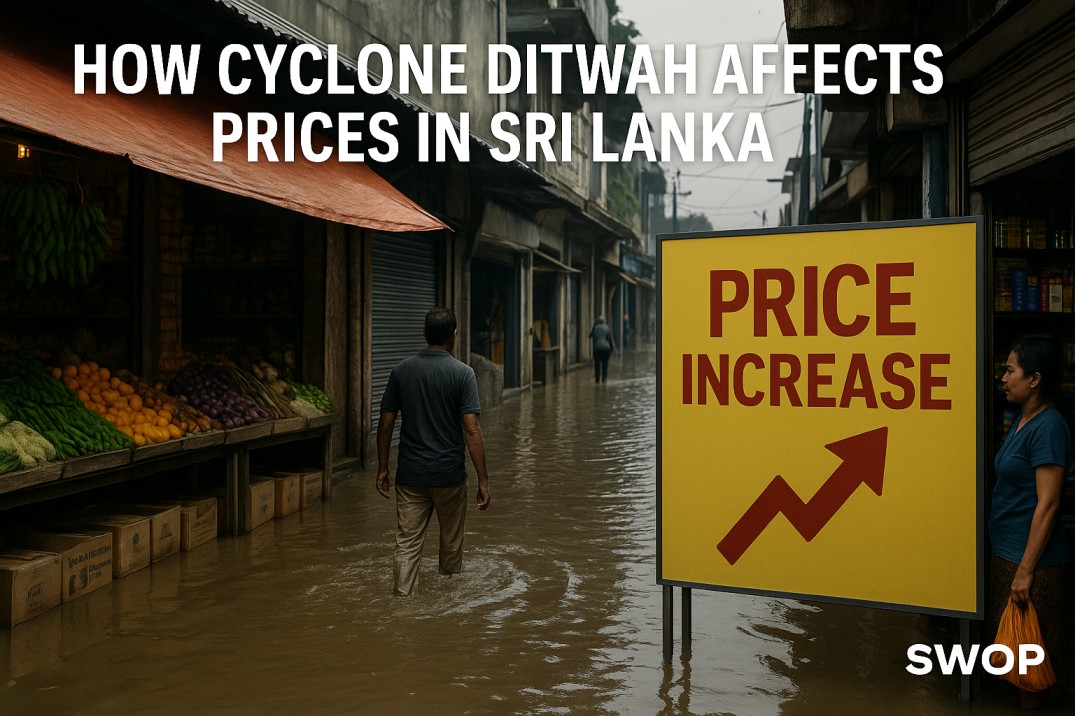
Cyclone Ditwah has not only caused widespread flooding across Sri Lanka but has also triggered a sharp and immediate shift in prices for food, essential goods, and everyday electronics. As roads, bridges, markets, and distribution centers were disrupted by the storm, supply chains slowed down or stopped entirely. This sudden break in transportation and availability has led to noticeable price increases across the country particularly in Colombo, Gampaha, Kalutara, and several other heavily affected districts.
For many households already struggling with rising costs, understanding why prices have changed, which items are most affected, and how long this situation may last has become essential. From bottled water and dry rations to power banks and mobile phones, the impact of Cyclone Ditwah on Sri Lanka’s consumer market is broad, immediate, and still evolving.
This report breaks down exactly how the cyclone has influenced prices across key categories and what Sri Lankans can expect in the coming weeks as recovery efforts continue.
Immediate Economic Shock After the Floods
Cyclone Ditwah delivered a sudden economic jolt across Sri Lanka, disrupting normal market activity within just hours of the storm’s landfall. As floodwaters spread across major districts, the immediate effects on supply, demand, and logistics became evident and prices for many goods began to shift rapidly.
1. Closure of Shops, Markets, and Transport Routes
Flooding forced many supermarkets, groceries, pharmacies, and electronics stores to shut down either due to water damage, electricity cuts, or accessibility issues. With major roads blocked and bridges damaged, delivery trucks were unable to reach key distribution points.
This led to instant shortages, especially in urban areas.
2. Sudden Spike in Demand for Essentials
As families rushed to secure food, water, and emergency supplies, demand soared. Items such as:
- bottled water
- dry rations
- candles and batteries
- power banks
- baby formula
saw significant increases in consumer demand within 24 hours.
3. Supply Chain Disruptions Across Multiple Provinces
The cyclone interrupted deliveries between districts especially routes from agricultural regions to city markets. This reduced the inflow of fresh produce and packaged goods, creating a mismatch between supply and demand.
4. Power Cuts and Communication Issues
Electricity outages and network disruptions affected wholesalers and retailers, slowing down billing, refrigeration, and stock management. This further limited the availability of goods.
5. Panic Buying in Heavily Affected Areas
In Colombo, Gampaha, Kalutara, and Ratnapura, many households stocked up on essentials as soon as waters began rising. Panic buying contributed to temporary price spikes in both physical and online stores.
How Cyclone Ditwah Affected Food Prices in Sri Lanka
Cyclone Ditwah caused immediate and noticeable changes to food prices across Sri Lanka. With transportation routes blocked, agricultural areas flooded, and market access limited, both availability and affordability of key food items shifted sharply. These fluctuations have been particularly visible in Colombo, Gampaha, Kalutara, and several southern districts.
1. Rice, Lentils & Dry Rations Increased Due to Transport Disruptions
Dry foods saw some of the earliest price increases because they are the first items consumers purchase during emergencies.
- Rice: Availability dropped in several urban supermarkets, pushing retail prices up.
- Lentils (Dhal): Prices increased due to a combination of high demand and slow restocking.
- Flour, sugar, noodles: Many large wholesalers reported delays in shipments.
Most price increases were not due to shortage of production but due to delivery trucks unable to reach stores.
2. Fresh Vegetables Became Significantly More Expensive
Flooding hit many farming regions, damaging vegetable plots and disrupting harvesting. This caused immediate price spikes for:
- tomatoes
- onions
- leeks
- green leaves
- carrots
- beans
Colombo markets recorded some of the highest increases, as supply coming from central and upcountry farms slowed down due to landslides and road closures.
3. Milk, Eggs & Dairy Products Saw Noticeable Price Fluctuations
Flood-related disruptions affected both supply and storage:
- Fresh milk: Limited by transportation issues.
- Eggs: Prices rose because many poultry farms struggled with feed delivery interruptions.
- Yogurt and butter: Cold-chain challenges caused shortages in select districts.
4. Packaged & Canned Foods Became High-Demand Items
Due to electricity cuts and cooking difficulties, many households turned to:
- canned fish
- canned vegetables
- instant noodles
- cereal and milk powder
Demand surged faster than restocking, causing mild to moderate price increases.
5. Water Shortages Drove Bottled Water Prices Up
One of the biggest price movements was bottled water.
- Floodwater contaminated wells
- Municipal supply became unreliable in several districts
- Demand soared instantly
Some shops doubled prices temporarily until regulators intervened.
6. Regional Differences in Food Prices
Prices varied sharply depending on district:
Highest increases:
- Colombo — due to panic buying
- Gampaha — severe transport issues
- Kalutara — shops flooded or closed
Moderate increases:
- Kandy
- Galle
- Matara
Least impacted:
- Northern Province (supply routes more stable)
Shortage of Essentials: Water, Hygiene Products & Baby Items
Cyclone Ditwah created a sudden and intense shortage of essential household items across multiple districts. With shops flooded, supply routes blocked, and demand rising overnight, several categories of daily-use products became difficult to find — and prices increased accordingly.
1. Bottled Water: The Highest Immediate Price Spike
Contaminated wells and damaged municipal water systems caused bottled water to become the most sought-after essential.
- Prices doubled in some Colombo and Gampaha stores before regulators stepped in.
- In Kalutara and Ratnapura, bottled water became temporarily unavailable.
- Many residents relied on relief supplies rather than retail stores.
Reason:
Drinking water was the first and most critical need during flooding.
2. Hygiene Products: Soaps, Disinfectants & Cleaning Supplies
Demand skyrocketed for:
- handwash and bar soap
- bleach and disinfectant liquids
- washing powder
- sanitary pads
- adult diapers
Flood conditions increase the risk of disease, so hygiene items became high-priority purchases.
Why prices rose:
- stock damage in shops
- high consumer demand
- slower restocking due to transport disruption
3. Baby Items: Formula, Diapers & Wet Wipes
Families with infants faced significant challenges:
- baby formula was one of the hardest items to find
- diapers saw instant stockouts in several districts
- wet wipes prices increased due to limited supply
Baby formula is an imported item for many brands so any disruption in logistics immediately affects availability.
4. Medication & First-Aid Supplies
Flooding increased the need for:
- ORS (oral rehydration salts)
- paracetamol
- antiseptics
- bandages
Prices for basic medicines remained relatively stable due to regulation, but availability dropped in heavily affected zones.
5. Cooking Gas & Fuel Issues
While not extreme, some areas experienced:
- delayed deliveries of LPG
- increased tuk-tuk delivery costs
- temporary shortages
This added pressure on households dealing with already-limited resources.
6. Why Essentials Become Expensive After Floods
The main drivers are:
- supply chain disruption
- high demand + panic buying
- damaged retail inventory
- restricted access to warehouses
- transportation delays due to road damage
This combination creates rapid price movement even if national supply is sufficient.
Electronics and Emergency Devices Price Impact
Cyclone Ditwah created a surge in demand for electronic items—especially those needed for communication, lighting, and emergency power. With outages across multiple districts and many shops unable to open, these products saw some of the most dramatic post-cyclone price movements.
1. Power Banks: The Fastest-Selling Emergency Item
Power banks became essential as thousands experienced long power cuts.
What happened to prices:
- In Colombo, some models doubled in price temporarily.
- Cheaper brands sold out within hours.
- Higher-capacity models (20,000mAh+) became almost unavailable offline.
Reason:
Communication is critical during floods. People needed reliable backup power for:
- phones
- torches
- portable routers
2. Mobile Phones: Increased Demand, Reduced Availability
Flooding damaged many:
- mobile shops
- repair centers
- electronic distributors
Consumers whose phones were water-damaged rushed to buy replacements, creating high demand.
Result:
- Popular budget phones saw price increases.
- Mid-range models temporarily sold out in some districts.
- Repairs took longer due to workshop overload.
3. Torches, Lanterns & Rechargeable Lights
Flashlights and rechargeable lamps saw massive demand during power outages.
- Prices rose due to lack of stock.
- Multi-mode LED torches sold out in coastal and suburban areas.
- Rechargeable lanterns became scarce in Gampaha and Kalutara.
People needed these items not only for lighting but for safety during nighttime flooding.
4. Chargers, Cables & Small Accessories
Transport issues delayed restocking of these smaller items:
- USB cables
- fast chargers
- car chargers
- multi-plugs
Some local stores reported complete stockouts.
5. Portable Fans & Emergency Cooling Devices
With extended power cuts and high humidity, many households turned to USB fans and rechargeable mini-fans.
- Prices were stable initially but increased as stock ran out.
- Delivery delays pushed more buyers to online platforms.
6. Why Electronics Become More Expensive After Disasters
There are four key factors:
- High consumer demand (power cuts & damaged devices)
- Reduced supply (shop closures, flooded warehouses)
- Blocked transportation routes
- Import delays (for mobile phones, power banks, chargers)
Even items that normally have stable price points become vulnerable during nationwide disruption.
7. How Online Platforms Help Consumers Compare Prices
During the post-cyclone period, many Sri Lankans turned to online marketplaces to avoid inflated offline prices.
Platforms like swop.lk allowed users to:
- compare prices from multiple sellers
- check stock availability
- avoid overpaying for essentials
- find replacements for damaged electronics
- locate emergency-ready devices faster
This reduced the impact of temporary price spikes in offline stores.
Regional Price Differences Across Sri Lanka
Cyclone Ditwah did not affect all districts equally and neither did the resulting price changes. Flood severity, road accessibility, shop closures, and supply chain disruptions all contributed to regional variation in food, essentials, and electronics prices.
Here’s a breakdown of how different parts of Sri Lanka were impacted:
1. Colombo District: Highest Price Volatility
Colombo experienced:
- widespread shop closures
- blocked main roads
- panic buying
- faster depletion of supermarket stock
As a result, prices for:
- bottled water
- vegetables
- power banks
- baby items
rose significantly faster compared to other regions.
Reason: Colombo has the highest population density, creating immediate demand spikes.
2. Gampaha District: Sharp Increase in Essential Goods
Gampaha faced severe flooding, especially around Negombo, Ja-Ela, and Kelaniya.
Effects included:
- shortages of water & hygiene items
- higher transport costs
- damaged retail outlets
- delays in restocking supermarkets
This made essential items more expensive than usual.
3. Kalutara District: Supply Chain Breakdown Due to Road Damage
Kalutara’s key issue was transport disruption, not stock shortage.
Road closures prevented deliveries, causing price increases in:
- dry rations
- fresh produce
- cooking gas
- cleaning supplies
Local markets recovered more slowly than urban centers.
4. Kandy & Central Province: Moderate Price Changes
Central Province was less physically impacted by floods, but supply chains still slowed down.
Price changes here were:
- mild to moderate
- driven by limited inbound transport
- influenced by higher nationwide demand for essentials
Fresh vegetable prices fluctuated due to difficulty transporting produce downward from hill country farms.
5. Southern Province (Galle, Matara): Temporary Shortages
Southern districts experienced strong winds and flooding but recovered faster.
Key observations:
- essential goods remained mostly available
- electronics saw short-term price hikes
- baby items had temporary stockouts in some stores
6. Northern Province: Least Impact on Prices
Northern areas (Jaffna, Kilinochchi, Mannar) saw:
- minimal flooding
- stable shop operations
- very limited price changes
This region was least impacted due to distance from storm path.
7. Why Regional Price Variation Happens After Cyclones
Because different regions face different levels of:
- road damage
- shop closures
- warehouse access
- population density
- reliance on imports vs. local goods
The result is uneven price instability across the country.
How the Supply Chain Disruption Escalated Prices
Cyclone Ditwah triggered one of the most severe supply chain disruptions Sri Lanka has experienced in recent years. Even items that were fully stocked at national level became temporarily scarce because the distribution network collapsed. When transport slows down or stops, prices climb even if the country technically has enough product.
Here’s how the breakdown happened:
1. Damaged Roads, Bridges & Transport Routes
Floods and landslides blocked several major highways and secondary roads, especially in:
- Western Province
- Sabaragamuwa
- Southern Province
Delivery trucks carrying food, water, and essential goods could not reach many districts.
This caused delayed restocking, which directly drives up prices.
2. Warehouses & Storage Facilities Affected by Flooding
Some distribution centers near Colombo, Kalutara, and Gampaha were partially flooded.
Consequences:
- damaged stock
- reduced loading capacity
- slower dispatch times
Even a two-day disruption at a major warehouse can create nationwide shortages.
3. Reduced Workforce & Limited Operational Hours
Flooded neighborhoods meant thousands of workers couldn’t reach warehouses, delivery hubs, or retail stores.
This led to:
- late openings
- early closures
- fewer deliveries per day
- slower inventory turnover
Lower manpower → slower supply chain → higher prices.
4. High Fuel Costs & Delays in Fuel Distribution
Some areas experienced disruptions in fuel availability due to:
- blocked access roads
- delivery delays
- increased use of generators during power cuts
Higher fuel costs increase the transportation cost per delivery, which trickles down to retail prices.
5. Cold Chain Interruptions (Dairy, Meat, Yogurt, Ice Cream)
Power cuts affected refrigeration across:
- supermarkets
- distribution centers
- small groceries
This led to:
- spoilage of perishable goods
- reduced availability
- higher prices for items that survived the chain
Cold chain disruptions create immediate and significant price fluctuations.
6. Import Delays for Electronics & Packaged Goods
Sri Lanka depends heavily on imports for:
- electronics
- baby products
- certain dry foods
- packaged goods
Port operations slowed due to bad weather, reducing supply flow.
This caused temporary price increases for:
- power banks
- mobile phones
- chargers
- baby formula (highly import-dependent)
7. Increased Demand with Reduced Supply → Price Spike
When supply slows and demand rises, retailers adjust prices sometimes moderately, sometimes aggressively.
Typical pattern after Cyclone Ditwah:
- Moderate increases → water, hygiene items, baby products
- Higher increases → electronics, power banks, torches
- Sharp increases → fresh vegetables during the first week
This is a classic supply-demand imbalance amplified by transport limitations.
8. How Long Supply Chain Disruptions Usually Last
Based on previous Sri Lankan floods:
- Urban areas recover fastest (2–5 days)
- Semi-urban areas take 5–10 days
- Districts with severe road damage may take 2–4 weeks to fully stabilize
Cyclone Ditwah’s severe infrastructure impact suggests supply chains may normalize gradually over several weeks.
impact on E-Commerce & Digital Price Comparison (Including SWOP)
Cyclone Ditwah not only disrupted physical markets but also shifted consumer behavior across Sri Lanka. With many shops closed, roads blocked, and availability uncertain, thousands of people turned to online platforms to find essentials, compare prices, and check product availability during the crisis.
1. Surge in Online Searches for Essentials
Immediately after the floods, search volumes increased significantly for:
- bottled water
- dry rations
- baby formula and diapers
- power banks
- torches & emergency lights
People wanted to know where these items were available and which sellers still had stock.
This trend directly boosted online marketplace traffic.
2. Why Online Shopping Became More Reliably Accessible
Physical stores faced major challenges:
- flooding
- stock damage
- limited opening hours
- electricity and network issues
- suspended deliveries
Meanwhile, online platforms provided:
- real-time availability
- multiple sellers in one place
- easier price comparison
- the ability to order even during transport restrictions (within available zones)
3. Price Comparison Became Essential to Avoid Overpaying
Due to temporary price hikes in many offline shops especially for emergency electronics consumers increasingly checked prices online to avoid unjustified markups.
Platforms like SWOP helped users:
- compare prices for essentials
- find sellers with fair pricing
- avoid inflated costs in affected districts
- choose between multiple delivery options
- locate hard-to-find products (power banks, torches, chargers)
This made online price transparency a critical tool during the crisis.
4. Increased Demand for Electronics & Flood-Related Essentials
Strong buyer intent for:
- power banks
- cables & chargers
- rechargeable lamps
- portable fans
- small appliances
These items often went out of stock offline but remained available through online sellers in other regions.
Consumers also searched for replacement electronics after water damage, boosting demand across categories.
5. Delivery Challenges — But Still More Reliable Than Offline
Even though online delivery systems were affected, they still provided more consistent access compared to physical shops.
Challenges included:
- restricted delivery zones
- slower delivery times
- delays due to flooded roads
However, many buyers preferred waiting 24–48 hours instead of visiting multiple closed or out-of-stock stores.
6. Rise of “Check First, Buy Later” Behavior
Rather than buying immediately, many Sri Lankans first:
- checked stock
- compared prices
- verified delivery times
- read seller reviews
This shift shows growing consumer awareness especially during emergencies when prices fluctuate rapidly.
7. SWOP’s Role During the Cyclone Period (Non-Promotional, Informational)
Online marketplaces like SWOP became useful in:
- browsing essentials when local shops were shut
- finding emergency electronics quickly
- comparing prices to avoid overpaying
- checking which sellers could deliver to specific districts
- identifying in-stock items without traveling during floods
This helped consumers make informed, safer decisions during a highly unstable period.
Government Interventions & Price Controls
As prices for food, essentials, and electronics began to fluctuate after Cyclone Ditwah, the Sri Lankan government implemented several urgent measures to prevent exploitation, stabilize the market, and ensure access to basic necessities. These actions played a major role in limiting artificial price inflation and maintaining supply across the most affected districts.
1. Maximum Retail Price (MRP) Enforcement on Key Essentials
The government strengthened monitoring of MRP on:
- bottled water
- baby formula
- lentils
- milk powder
- rice
- canned fish
Inspectors conducted surprise checks across Colombo, Gampaha, and Kalutara to prevent retailers from inflating prices.
Impact:
Helped reduce dramatic spikes in bottled water and baby formula costs.
2. Deployment of Mobile Shops & Relief Distribution Vehicles
To serve areas where shops were closed or flooded, authorities sent mobile distribution units carrying:
- drinking water
- dry rations
- hygiene items
- emergency medicines
These units reduced pressure on private supermarkets and stabilized local supply.
3. Import Adjustments for Essentials & Electronics
To counter shortages, the government allowed:
- fast-tracked imports of dry food
- emergency procurement of water bottles
- expedited clearance for essential electronics shipments (power banks, chargers)
This helped stabilize stock quicker, especially in urban areas.
4. Fuel Distribution Stabilization
Since transportation costs directly affect food and essential-item prices, the government prioritized:
- fuel distribution to delivery fleets
- uninterrupted supply for emergency vehicles
- diesel allocations for generators in flood-affected districts
This significantly reduced logistics delays.
5. Strict Monitoring Against Price Gouging
Authorities set up hotlines for reporting unfair pricing.
Retailers caught inflating prices during the cyclone recovery faced:
- fines
- temporary shop closures
- license review
This helped discourage opportunistic price hikes, especially for bottled water and hygiene products.
6. Support for Agricultural Recovery
Floods damaged crops in lowland farming regions. To prevent long-term food shortages, the government introduced:
- subsidies for replanting
- emergency seeds and fertilizer distribution
- temporary compensation for affected farmers
This is expected to help stabilize vegetable prices in the coming weeks.
7. Restoration of Market Operations & Transport Networks
The government prioritized reopening:
- wholesale markets
- supply hubs
- fish markets
- transport corridors
As roads and bridges reopen, prices are expected to slowly decline toward pre-cyclone levels.
8. Public Awareness Alerts About Stabilized Prices
Authorities issued official price guidance to inform citizens which products should not exceed set price points.
This helped consumers verify fair pricing and avoid being overcharged.
Expected Price Trends in the Coming Weeks
As Sri Lanka continues recovering from Cyclone Ditwah, prices across key categories are expected to shift again this time more gradually and predictably. The stabilization timeline largely depends on infrastructure repairs, supply chain recovery, and the reopening of flooded retail zones. Here’s what consumers can realistically expect over the next few weeks.
1. Bottled Water & Hygiene Products Will Normalize First
As relief teams restore water access and more supply reaches affected districts, the prices of:
- bottled water
- soap
- detergents
- disinfectants
are expected to stabilize within 5–10 days.
Reason: High-volume distribution and strong government monitoring.
2. Dry Rations Should Return to Normal Within 1–2 Weeks
Dry goods like:
- rice
- lentils
- sugar
- flour
- noodles
will likely stabilize as warehouses resume operations and transport routes reopen.
Transport recovery = price recovery.
3. Fresh Vegetable Prices May Stay Elevated Longer
Expect fluctuations for:
- tomatoes
- leeks
- beans
- leafy greens
for 2–4 weeks, depending on:
- recovery of farming regions
- weather conditions
- access to hill country routes
Flooded fields require time to replant, so full normalization may take longer.
4. Baby Formula & Diapers May Take Longer to Stabilize
Since these are import-dependent items, prices may remain higher due to:
- shipping delays
- port congestion
- limited stock turnover
Estimated stabilization: 3–5 weeks.
5. Electronics Will Normalize Slowly, Depending on Imports
Prices for:
- power banks
- mobile phones
- chargers
- rechargeable lights
may remain unstable until new shipments arrive.
Why:
- high post-flood demand
- damage to local shops
- slow import cycles
Expected timeline: 2–4 weeks, depending on availability.
6. Fuel-Related Transport Costs Will Influence Food Prices
If fuel distribution returns fully to normal, transport costs will decrease.
Lower transport costs typically result in:
- cheaper vegetables
- faster restocking
- more stable retail pricing
This is key to the overall stabilization process.
7. Government Price Monitoring Will Help Prevent Future Spikes
Increased enforcement means that essential goods are less likely to experience extreme fluctuations again unless further weather events occur.
8. Long-Term Outlook: Gradual Return to Pre-Cyclone Stability
If no new disruptions occur, the market is expected to normalize over 4–8 weeks.
Items that normalize fastest:
- water
- hygiene items
- dry foods
Items that normalize slowest:
- vegetables
- baby formula
- electronics
FAQs
1. Why did prices increase after Cyclone Ditwah?
Prices rose due to a combination of:
- supply chain disruptions
- flooded roads and transport delays
- damaged retail stock
- power cuts affecting cold storage
- panic buying and sudden demand spikes
When supply slows but demand rises, prices naturally increase even when national stock levels are adequate.
2. Which items became more expensive after the floods?
The most affected items were:
- bottled water
- vegetables and fresh produce
- baby formula and diapers
- hygiene products
- power banks and emergency electronics
These items either saw high demand or faced stock limitations due to transport issues.
3. Are electronics more expensive after floods and cyclones?
Yes. Electronics such as power banks, chargers, basic phones, torches, and rechargeable lights typically increase in price due to:
- high emergency demand
- damage to physical shops
- slower import cycles
- limited availability in local markets
Online marketplaces often provide better pricing during these disruptions.
4. How long will it take for prices to stabilize in Sri Lanka?
Most prices should begin stabilizing within:
- 5–10 days → water & hygiene items
- 1–2 weeks → dry foods
- 2–4 weeks → vegetables
- 3–5 weeks → baby formula
- 2–4 weeks → electronics
Full stabilization may take up to 4–8 weeks, depending on road repairs and import schedules.
5. How can Sri Lankans avoid overpaying during disasters?
To avoid inflated prices:
- compare prices online
- check multiple sellers before buying
- follow government-issued price guidelines
- buy only what you need (avoid panic buying)
- monitor marketplace platforms for availability updates
Platforms like SWOP can help consumers compare prices quickly and identify fair deals during shortages.
6. Will food shortages continue in the coming weeks?
Shortages may continue temporarily for:
- vegetables (farm damage)
- baby items (import delay)
- select electronics (high demand)
Dry foods and bottled water are expected to normalize much sooner as transport routes reopen.
7. Why did baby formula and diapers become hard to find?
Because these items are heavily import-dependent. Any disruption to:
- shipping
- port clearance
- warehouse distribution
Cyclone Ditwah has caused more than physical destruction across Sri Lanka it triggered a rapid and complex shift in the country’s consumer market. Prices for food, essential goods, and electronics changed almost overnight as supply chains were disrupted, transport routes flooded, and demand surged across multiple districts. While some price increases were temporary, others will take weeks to stabilize as warehouses reopen, crops recover, and new shipments of imports arrive.
For households already navigating difficult economic conditions, understanding why prices changed, which items are most affected, and how long stabilization may take is essential. The good news is that as relief operations expand and transport networks reopen, the market is gradually moving toward recovery. Essentials like water, hygiene products, and dry foods are expected to normalize fastest, while vegetables, baby formula, and electronics may take more time.
During high-uncertainty periods like this, Sri Lankans increasingly rely on digital tools and online marketplaces to compare prices, avoid overpaying, and find essentials when local shops are closed or out of stock. Platforms like SWOP helped many consumers locate emergency electronics, essential goods, and daily-use items during the cyclone recovery period offering transparency and accessibility when the offline market became unpredictable.
As Sri Lanka rebuilds, one thing remains clear: access to reliable information, fair pricing, and resilient distribution systems is just as important as physical infrastructure. With coordinated efforts from the government, suppliers, and digital platforms, the country is on track to regain stability in the weeks ahead.










Leave a Comment